List of iron-rich foods – Best absorbed by the body
best iron-rich foods
🥩 Heme Iron Sources (Best absorbed by the body — from animal foods)
These provide highly bioavailable iron (15–35% absorption).
| Food | Iron (mg per 100 g) | Notes |
|---|---|---|
| Liver (chicken) | 6–12 mg | One of the richest sources |
| Red meat (lamb) | 2–3 mg | Easily absorbed |
| Poultry (chicken, turkey) | 1–2 mg | Dark meat has more iron |
| Seafood (oysters, clams, mussels) | 7–30 mg | Very rich in heme iron |
| Fish (sardines, tuna, salmon) | 1–3 mg | Good lean source |
🌾 Non-Heme Iron Sources (Plant-based, less absorbed 2–10%)
Absorption increases when eaten with Vitamin C (e.g., lemon, orange, tomatoes).
| Food | Iron (mg per 100 g) | Notes |
|---|---|---|
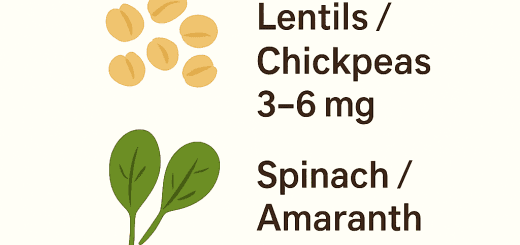
| Legumes (lentils, chickpeas, beans) | 3–6 mg | Soak or sprout to improve absorption |
| Tofu, tempeh, soybeans | 5–9 mg | Great vegetarian source |
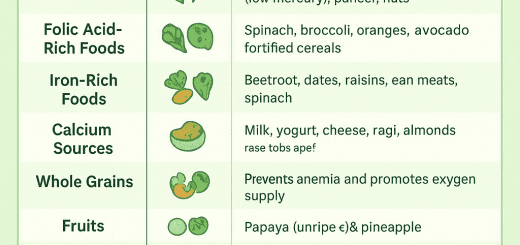
| Dark green leafy vegetables (spinach, kale, amaranth) | 2–4 mg | Combine with lemon juice or tomato |
| Whole grains (quinoa, oats, brown rice) | 2–4 mg | Iron + fiber benefit |
| Nuts & seeds (pumpkin, sesame, flax, almonds) | 4–9 mg | Best eaten roasted or soaked |
| Dried fruits (apricots, raisins, prunes) | 2–4 mg | Concentrated source of iron |
| Fortified cereals & breads | 4–18 mg | Check label; many are fortified with iron |
🍊 Enhance Iron Absorption With
- Vitamin C-rich foods: citrus fruits, guava, bell pepper, tomatoes
- Fermented foods: idli, dosa, kimchi, sauerkraut
🚫 Avoid Taking Iron With
- Tea or coffee (contains tannins that inhibit absorption)
- Calcium-rich foods or supplements (milk, cheese)
- Phytate-rich raw grains (soak or ferment them to reduce inhibition)
🩸 Iron-Rich Foods — 30 Frequently Asked Questions
1. What are the richest food sources of iron?
Liver, red meat, oysters, clams, lentils, beans, spinach, tofu, and fortified cereals are among the richest sources of dietary iron.
2. What are heme and non-heme iron?
Heme iron is found in animal foods and is easily absorbed. Non-heme iron is found in plant foods and has lower absorption but can be improved with vitamin C.
3. Which meat contains the most iron?
Beef liver contains the highest amount, followed by lean red meats like beef and lamb.
4. What plant foods are high in iron?
Lentils, chickpeas, beans, tofu, spinach, kale, pumpkin seeds, quinoa, and fortified cereals are good plant sources of iron.
5. How can vegetarians increase iron absorption?
Combine iron-rich foods with vitamin C sources like lemon, orange, or tomato; avoid tea and coffee with meals.
6. Does spinach really contain high iron?
Yes, spinach contains non-heme iron, but absorption is modest. Cooking and adding lemon juice can enhance bioavailability.
7. Which seafoods are rich in iron?
Oysters, clams, mussels, sardines, and tuna are high in heme iron.
8. Are eggs a good source of iron?
Eggs contain small amounts of iron, but its absorption is relatively low due to the presence of inhibitors.
9. What nuts and seeds are highest in iron?
Pumpkin seeds, sesame seeds, flaxseeds, and almonds are good iron-rich snacks.
10. Can iron deficiency cause fatigue?
Yes. Iron deficiency reduces oxygen transport, causing tiredness, weakness, and poor concentration.
11. Which vitamins improve iron absorption?
Vitamin C and folate enhance iron absorption and utilization.
12. What foods block iron absorption?
Tea, coffee, dairy, and foods high in calcium or phytates can inhibit iron absorption.
13. Is iron from meat absorbed better than from plants?
Yes, heme iron (from meat) is absorbed more efficiently—up to 35% compared to 2–10% for non-heme iron.
14. Do fortified cereals provide enough iron?
Many fortified cereals contain 4–18 mg per serving and can meet a significant portion of daily needs.
15. How much iron does the body need daily?
Adult men need about 8 mg/day; women (especially premenopausal) need 18 mg/day due to menstrual losses.
16. Can too much iron be harmful?
Yes, excess iron can cause toxicity and damage organs. It should not be supplemented unless prescribed.
17. Which fruits help boost iron intake?
Dried apricots, prunes, raisins, and iron-fortified fruit juices can increase iron intake.
18. Is cooking in cast iron cookware beneficial?
Yes, cooking acidic foods (like tomato curry) in cast iron pans can increase iron content in food.
19. How can vegans meet their iron needs?
By combining lentils, beans, tofu, fortified grains, nuts, and vitamin C-rich foods regularly.
20. Does vitamin B12 affect iron absorption?
Vitamin B12 doesn’t directly affect absorption but is essential for red blood cell formation, preventing anemia.
21. What is the role of iron in the body?
Iron helps form hemoglobin and myoglobin, enabling oxygen transport in blood and muscles.
22. Can iron-rich foods improve hair health?
Yes, iron supports hair growth by improving oxygen delivery to hair follicles.
23. Are children at risk of iron deficiency?
Yes, especially toddlers and adolescents with high growth needs or poor diets.
24. Does boiling reduce iron in vegetables?
Minimal loss occurs, but steaming or sautéing helps retain more nutrients than prolonged boiling.
25. Which Indian foods are naturally rich in iron?
Ragi (finger millet), jaggery, amaranth leaves, Bengal gram, and dates are traditional Indian iron sources.
26. Do citrus fruits contain iron?
Not much iron, but they enhance iron absorption due to their high vitamin C content.
27. Can dehydration affect iron levels?
It doesn’t directly reduce iron, but chronic poor nutrition and hydration may affect absorption.
28. Is jaggery a good source of iron?
Yes, unrefined jaggery contains small amounts of iron and can help improve mild deficiency when used moderately.
29. How to identify iron deficiency anemia symptoms?
Pallor, fatigue, breathlessness, dizziness, and brittle nails are common signs.
30. What are some iron-rich snacks?
Roasted chickpeas, dry fruits mix, spinach cutlets, ragi laddoo, and pumpkin seeds are tasty and iron-rich.
Animal-Based Sources (Heme Iron)
- Organ meats such as liver
- Red meat (lamb)
- Poultry (chicken, turkey)
- Seafood (clams, oysters, mussels, tuna, sardines)
- Eggs
Plant-Based Sources (Non-Heme Iron)
- Legumes (lentils, chickpeas, kidney beans, soybeans, black beans)
- Dark green leafy vegetables (spinach, kale, collard greens, fenugreek leaves)
- Nuts and seeds (pumpkin seeds, sesame seeds, cashews, almonds)
- Dried fruits (raisins, dates, prunes, apricots, figs)
- Whole grains (quinoa, fortified cereals and breads, brown rice, ragi/finger millet)
- Tofu
- Dark chocolate (with high cocoa content)
- Other vegetables (sweet potatoes, potatoes with skin, broccoli, peas)
Tips to Maximize Iron Absorption
- Combine with Vitamin C Consuming non-heme iron foods with a source of Vitamin C (like citrus fruits, strawberries, tomatoes, or bell peppers) can significantly improve iron absorption.
- Use Cast Iron Cookware Cooking in cast iron pots and skillets can increase the iron content of your food, particularly for acidic dishes.
- Avoid certain drinks with meals Tea and coffee contain tannins and polyphenols that can inhibit iron absorption. It is best to consume these beverages at least one hour before or after an iron-rich meal.
- Limit calcium intake High calcium intake can interfere with iron absorption, so try to consume calcium-rich foods like milk and cheese at different times of the day than iron-rich meals.
🩸 Iron-Rich Foods at a Glance
(Heme vs. Non-Heme Iron Sources — Best for Preventing Anemia)
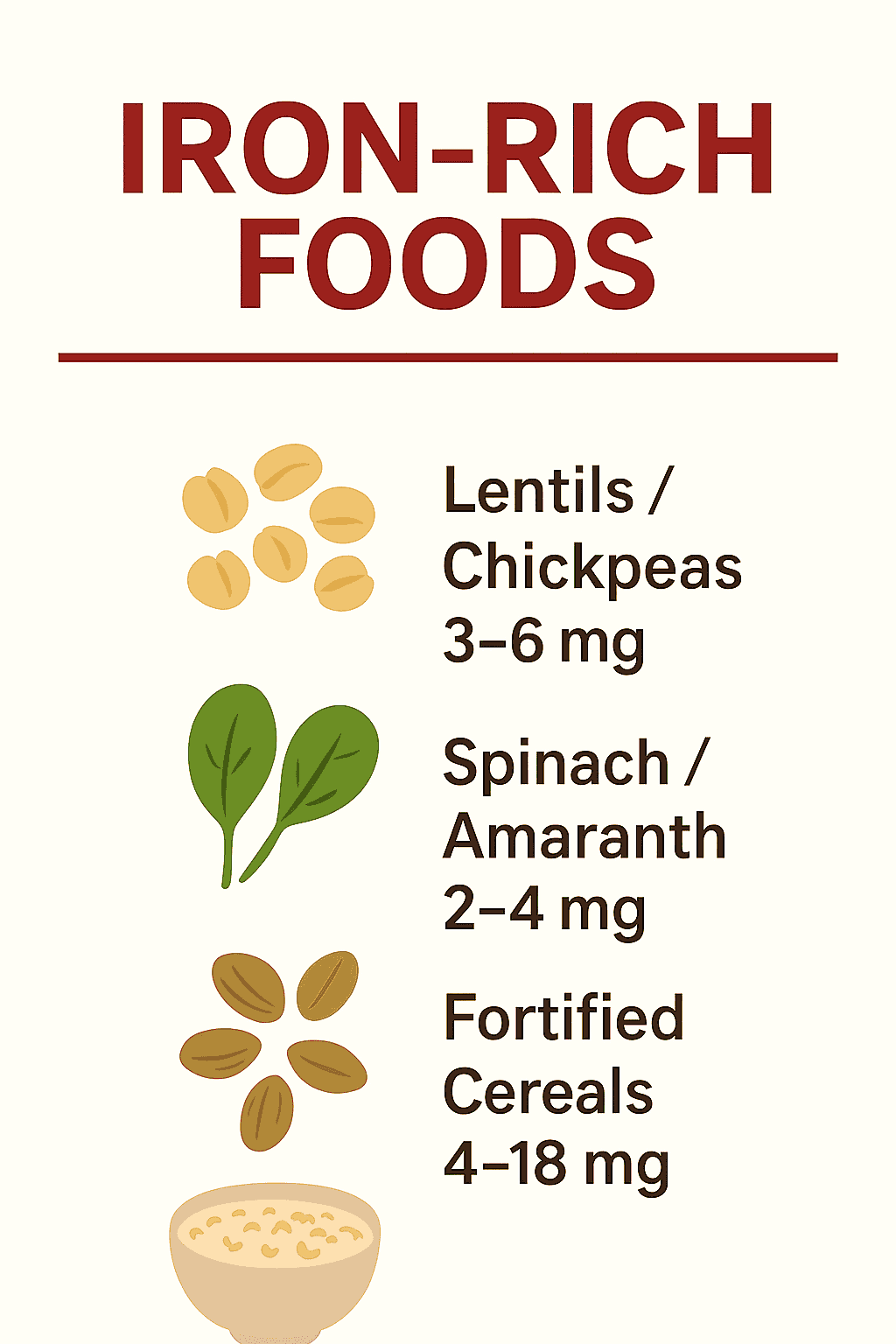
Fig: Balanced mix of animal and plant-based iron sources
| Category | Food Example | Iron (mg / 100 g) | Notes |
|---|---|---|---|
| Heme Iron | Beef Liver | 10–12 | Highest natural source |
| Heme Iron | Clams / Oysters | 7–30 | Excellent absorption |
| Heme Iron | Red Meat (Beef, Lamb) | 2–3 | Highly bioavailable |
| Non-Heme Iron | Lentils / Chickpeas | 3–6 | Improve with Vitamin C |
| Non-Heme Iron | Spinach / Amaranth | 2–4 | Best when cooked |
| Non-Heme Iron | Pumpkin Seeds / Almonds | 5–9 | Great for snacking |
| Non-Heme Iron | Fortified Cereals | 4–18 | Check label for iron type |
💡 Tip: Combine iron-rich foods with vitamin C sources (like lemon, oranges, tomatoes) and avoid tea/coffee during meals to improve absorption.