Low Cholesterol Diet Tips for Heart Health
Low Cholesterol Diet Tips for Heart Health
Choose Heart-Healthy Foods
- Increase fiber intake: Soluble fiber (found in oats, beans, lentils, apples, citrus, flaxseed) helps lower LDL (“bad” cholesterol).
- Eat more fruits & vegetables: Aim for at least 5 servings a day—rich in antioxidants and fiber.
- Whole grains: Swap refined carbs (white bread, pastries) for oats, brown rice, quinoa, or whole wheat.
🥑 Focus on Healthy Fats
- Limit saturated fats: Cut back on fatty meats, butter, full-fat dairy, and processed snacks.
- Choose unsaturated fats: Olive oil, avocado, nuts, seeds, and fatty fish (salmon, sardines, mackerel) improve cholesterol balance.
- Avoid trans fats: Check labels for “partially hydrogenated oils” in packaged foods—these raise LDL and lower HDL (“good” cholesterol).
🐟 Protein Choices
- Lean meats: Choose skinless poultry or lean cuts of beef/pork, in moderation.
- Plant proteins: Beans, lentils, tofu, tempeh, and edamame are cholesterol-free and heart-friendly.
- Fish: Aim for 2 servings per week of omega-3 rich fish.
🍽 Lifestyle & Eating Habits
- Cook smart: Grill, bake, steam, or sauté instead of frying.
- Watch portion sizes: Even healthy foods can add up in calories.
- Limit added sugars & refined carbs: These can worsen cholesterol and triglyceride levels.
- Stay hydrated: Water, unsweetened tea, or sparkling water instead of sugary drinks.
🧂 Extras to Boost Heart Health
- Nuts & seeds: Walnuts, almonds, chia, and flaxseeds are great for heart health.
- Spices instead of salt: Use garlic, turmeric, or herbs to flavor food and reduce sodium intake.
- Green tea: Contains antioxidants that may help improve cholesterol.
✅ Bonus lifestyle tips:
- Maintain a healthy weight.
- Exercise regularly (150 minutes of moderate activity per week).
- Limit alcohol, and quit smoking if applicable.
Low Cholesterol Diet Tips for Heart Health:
Low Cholesterol Diet Tips for Heart Health
Heart health is closely linked to cholesterol levels. High levels of LDL (“bad” cholesterol) can increase the risk of blocked arteries, heart attack, and stroke, while HDL (“good” cholesterol) helps clear cholesterol from the bloodstream. One of the most effective ways to manage cholesterol is through diet. By making smart food choices, you can protect your heart and improve overall well-being.
1. Increase Fiber Intake
Dietary fiber, especially soluble fiber, plays a major role in lowering LDL cholesterol. Foods such as oats, beans, lentils, apples, pears, and flaxseeds act like a sponge in the digestive tract, binding cholesterol and carrying it out of the body. Aim for at least 25–30 grams of fiber daily. Starting the day with oatmeal topped with fruit or adding beans to salads and soups are simple ways to boost fiber.
2. Eat More Fruits and Vegetables
Fruits and vegetables are naturally cholesterol-free and packed with antioxidants, vitamins, and fiber. They help reduce oxidative stress, which damages blood vessels and contributes to plaque buildup. Aim for at least five servings each day. Brightly colored produce such as spinach, berries, carrots, and oranges provide maximum heart-protective benefits.
3. Choose Whole Grains
Refined carbohydrates like white bread, pasta, and pastries may raise triglyceride levels, another factor in heart disease. Whole grains such as brown rice, quinoa, barley, and whole wheat bread provide fiber, B vitamins, and minerals. Swapping white rice for brown rice or choosing whole-grain pasta can significantly improve heart health.
4. Focus on Healthy Fats
Not all fats are harmful. The type of fat you eat matters more than the total amount. Saturated fats, found in red meat, butter, full-fat dairy, and fried foods, raise LDL cholesterol. Replace them with unsaturated fats from olive oil, avocados, nuts, seeds, and fatty fish. Omega-3 fatty acids, found in salmon, mackerel, and sardines, not only lower triglycerides but also protect the heart against abnormal rhythms.
5. Avoid Trans Fats
Artificial trans fats are one of the biggest dietary risks for heart health. They not only increase LDL cholesterol but also lower HDL cholesterol. Trans fats are often hidden in processed foods, margarine, baked goods, and fried fast foods. Always check nutrition labels for “partially hydrogenated oils” and choose alternatives like baked snacks or homemade meals.
6. Smart Protein Choices
Protein is essential, but the source matters. Choose lean meats such as skinless poultry and lean cuts of pork or beef in moderation. Better yet, shift toward plant proteins like beans, lentils, tofu, and tempeh, which are cholesterol-free and fiber-rich. Fish should be included at least twice per week for its omega-3 benefits. Eggs can be enjoyed in moderation, but limiting yolks may help those with high cholesterol.
7. Cook the Healthy Way
The way food is prepared can make a big difference. Frying adds unnecessary fat and calories, while grilling, baking, steaming, and sautéing in olive oil are heart-healthy cooking methods. Use herbs, garlic, ginger, and turmeric for flavor instead of salt, as excess sodium contributes to high blood pressure—a major risk factor for heart disease.
8. Limit Added Sugars and Refined Carbs
Excess sugar, found in sodas, sweets, and packaged snacks, can lower HDL cholesterol and raise triglycerides. Reducing sugary drinks and choosing water, herbal teas, or sparkling water instead is an easy heart-smart change.
9. Add Heart-Healthy Extras
Certain foods have proven cholesterol-lowering effects. Nuts like almonds and walnuts improve cholesterol ratios when eaten in moderation. Chia and flaxseeds provide fiber and omega-3s. Green tea contains catechins, powerful antioxidants that may help lower cholesterol and protect blood vessels.
10. Lifestyle Matters Too
Diet works best when combined with healthy habits. Regular exercise (at least 150 minutes of moderate activity per week), maintaining a healthy weight, quitting smoking, and limiting alcohol all enhance cholesterol control and protect the heart.
Final Thoughts
A low-cholesterol diet is not about strict restrictions but about smart choices. By increasing fiber, choosing healthy fats, avoiding trans fats, and focusing on plant-based, nutrient-rich foods, you can naturally reduce LDL cholesterol and strengthen heart health. Even small, consistent changes—like swapping butter for olive oil or adding an extra serving of vegetables—can add up to long-term benefits. Your heart will thank you for every step toward healthier eating.
Here’s a list of 30 FAQs on Low Cholesterol Diet & Heart Health with concise answers you can use for patient education or your website:
30 FAQs on Low Cholesterol Diet for Heart Health
1. What is cholesterol and why does it matter?
Cholesterol is a waxy substance in your blood. High LDL (“bad”) cholesterol increases heart disease risk, while HDL (“good”) cholesterol protects the heart.
2. Can diet really lower cholesterol?
Yes, a heart-healthy diet can reduce LDL levels and raise HDL, lowering overall heart risk.
3. Which foods are best for lowering cholesterol?
Oats, beans, lentils, fruits, vegetables, nuts, seeds, and fatty fish are excellent choices.
4. What foods should I avoid?
Limit fried foods, processed snacks, red meat, full-fat dairy, and baked goods with trans fats.
5. Are eggs bad for cholesterol?
Egg whites are cholesterol-free. Egg yolks have cholesterol but can be eaten in moderation unless advised otherwise by your doctor.
6. Is milk safe if I have high cholesterol?
Choose low-fat or skim milk, or plant-based alternatives like almond or soy milk.
7. Do nuts help lower cholesterol?
Yes, almonds, walnuts, and pistachios improve cholesterol levels when eaten in moderation.
8. How does fiber help cholesterol?
Soluble fiber binds cholesterol in the gut, helping to remove it from the body.
9. Can coffee raise cholesterol?
Unfiltered coffee (like French press) may raise cholesterol. Filtered coffee is generally safe.
10. Is olive oil good for cholesterol?
Yes, extra virgin olive oil is rich in healthy fats that improve cholesterol balance.
11. Should I stop eating meat?
Not necessarily. Choose lean cuts and limit portions. Plant proteins are better alternatives.
12. Are fish good for heart health?
Yes, fatty fish like salmon, sardines, and mackerel contain omega-3s that protect the heart.
13. Do plant-based diets lower cholesterol?
Yes, vegetarian and vegan diets are naturally low in cholesterol and high in fiber.
14. Is coconut oil healthy for cholesterol?
Coconut oil is high in saturated fat and may raise LDL; use sparingly.
15. Can garlic lower cholesterol?
Garlic may have a mild cholesterol-lowering effect, especially when used regularly.
16. Does exercise help lower cholesterol?
Yes, regular exercise raises HDL and lowers LDL and triglycerides.
17. How much water should I drink for heart health?
At least 6–8 glasses daily helps maintain circulation and overall health.
18. Is cheese okay if I have high cholesterol?
Choose low-fat cheese and limit portions to reduce saturated fat intake.
19. Can I eat butter on a low-cholesterol diet?
Butter is high in saturated fat. Use olive oil, avocado, or nut butter instead.
20. Are avocados good for cholesterol?
Yes, avocados are rich in healthy fats that help lower LDL.
21. Does sugar affect cholesterol?
Yes, too much sugar lowers HDL and raises triglycerides, which harms heart health.
22. Can green tea lower cholesterol?
Yes, antioxidants in green tea may help reduce LDL levels.
23. How quickly can diet lower cholesterol?
You may see results in 4–12 weeks with consistent healthy eating.
24. Are whole grains better than refined grains?
Yes, whole grains contain fiber and nutrients that lower cholesterol and support heart health.
25. Do processed foods affect cholesterol?
Yes, many processed foods contain trans fats and added sugars that raise cholesterol.
26. Is dark chocolate heart-healthy?
In moderation, dark chocolate with 70% cocoa or more may benefit heart health.
27. Can I drink alcohol if I have high cholesterol?
Limit alcohol; too much raises triglycerides and blood pressure.
28. Should I take supplements to lower cholesterol?
Supplements like omega-3s, plant sterols, or psyllium may help, but food is the best source.
29. How important is weight management for cholesterol?
Very important—losing even 5–10% of body weight can improve cholesterol.
30. What’s the best overall diet for cholesterol and heart health?
The Mediterranean diet, rich in fruits, vegetables, whole grains, nuts, olive oil, and fish, is highly effective.
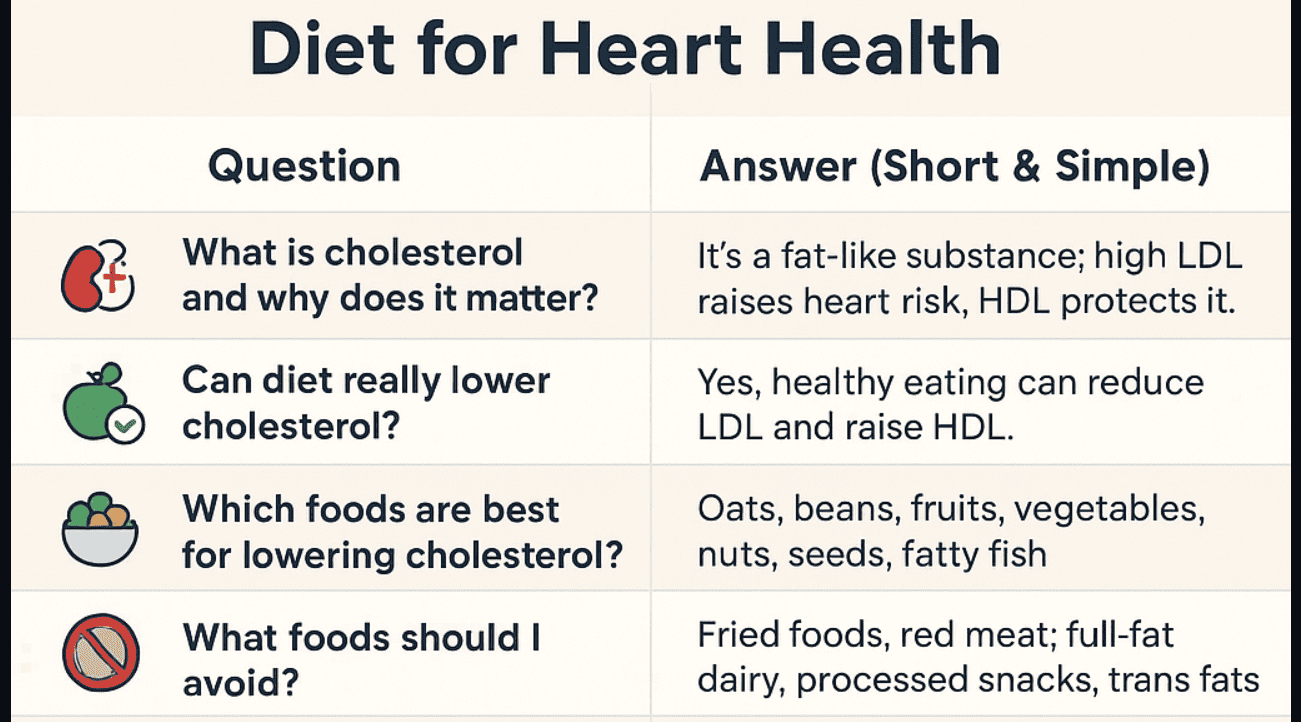
| Q No. | Question | Answer (Short & Simple) |
|---|---|---|
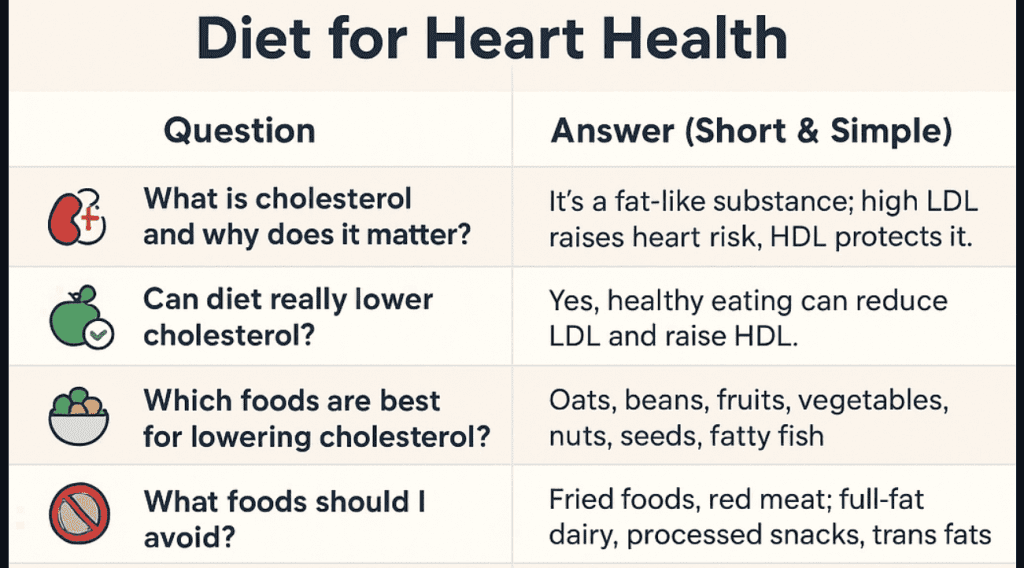
| 1 | What is cholesterol and why does it matter? | It’s a fat-like substance; high LDL raises heart risk, HDL protects it. |
| 2 | Can diet really lower cholesterol? | Yes, healthy eating can reduce LDL and raise HDL. |
| 3 | Which foods are best for lowering cholesterol? | Oats, beans, fruits, vegetables, nuts, seeds, fatty fish. |
| 4 | What foods should I avoid? | Fried foods, red meat, full-fat dairy, processed snacks, trans fats. |
| 5 | Are eggs bad for cholesterol? | Yolks contain cholesterol; eat in moderation. Whites are safe. |
| 6 | Is milk safe if I have high cholesterol? | Choose low-fat, skim, or plant-based milk. |
| 7 | Do nuts help lower cholesterol? | Yes, walnuts, almonds, and pistachios improve cholesterol. |
| 8 | How does fiber help cholesterol? | Soluble fiber removes cholesterol from the body. |
| 9 | Can coffee raise cholesterol? | Unfiltered coffee may raise cholesterol; filtered is safer. |
| 10 | Is olive oil good for cholesterol? | Yes, it has healthy fats that improve cholesterol balance. |
| 11 | Should I stop eating meat? | Not necessary—choose lean cuts and small portions. |
| 12 | Are fish good for heart health? | Yes, omega-3 rich fish protect the heart. |
| 13 | Do plant-based diets lower cholesterol? | Yes, they are naturally low in cholesterol and high in fiber. |
| 14 | Is coconut oil healthy for cholesterol? | Use sparingly; it’s high in saturated fat. |
| 15 | Can garlic lower cholesterol? | Garlic may slightly reduce cholesterol if used regularly. |
| 16 | Does exercise help lower cholesterol? | Yes, it raises HDL and lowers LDL. |
| 17 | How much water should I drink? | 6–8 glasses daily for overall health. |
| 18 | Is cheese okay with high cholesterol? | Choose low-fat cheese and eat in moderation. |
| 19 | Can I eat butter? | Limit it; replace with olive oil, avocado, or nut butter. |
| 20 | Are avocados good for cholesterol? | Yes, they lower LDL and support heart health. |
| 21 | Does sugar affect cholesterol? | Yes, too much sugar lowers HDL and raises triglycerides. |
| 22 | Can green tea lower cholesterol? | Yes, antioxidants in green tea may reduce LDL. |
| 23 | How quickly can diet lower cholesterol? | Results may show in 4–12 weeks. |
| 24 | Are whole grains better than refined grains? | Yes, whole grains lower cholesterol and support heart health. |
| 25 | Do processed foods affect cholesterol? | Yes, they often contain trans fats and added sugars. |
| 26 | Is dark chocolate heart-healthy? | In moderation, dark chocolate (70%+) benefits the heart. |
| 27 | Can I drink alcohol? | Limit intake; excess raises triglycerides and BP. |
| 28 | Should I take supplements? | Some help, but food sources are best. |
| 29 | How important is weight management? | Very—losing even 5–10% weight improves cholesterol. |
| 30 | What’s the best overall diet for cholesterol? | The Mediterranean diet is most effective. |