Science of sleep cycles: You should know
Science of sleep cycles
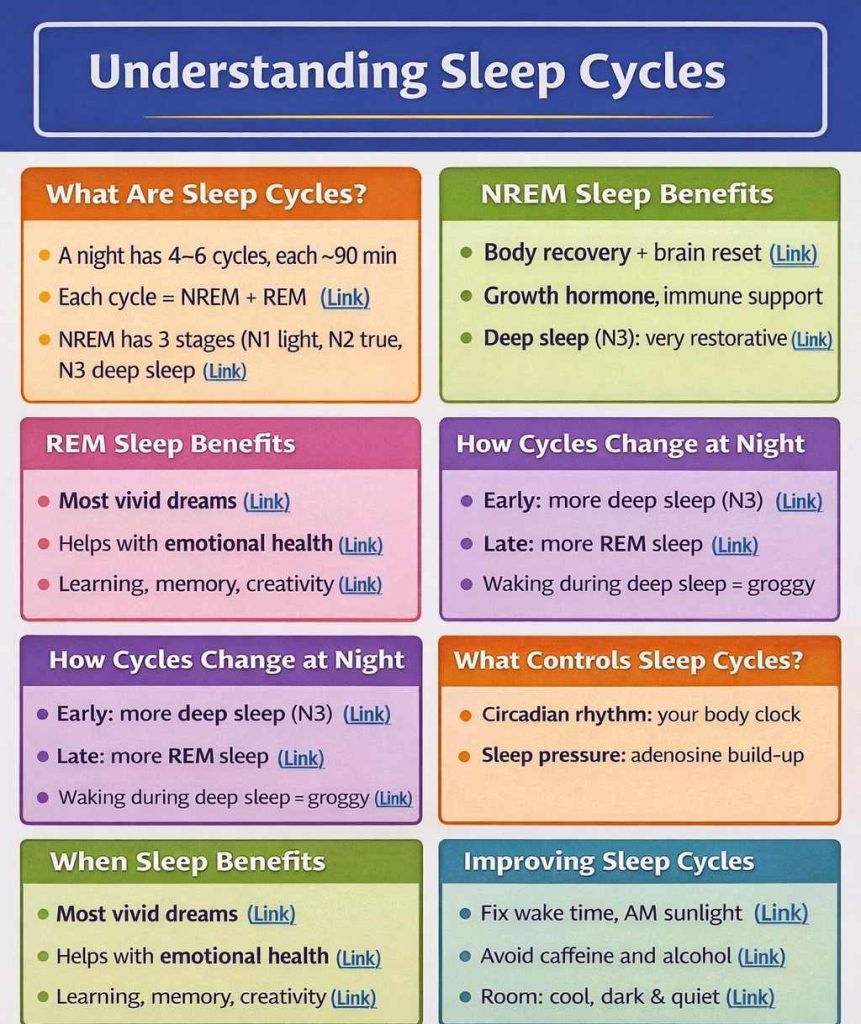
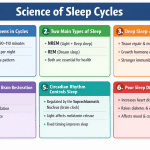
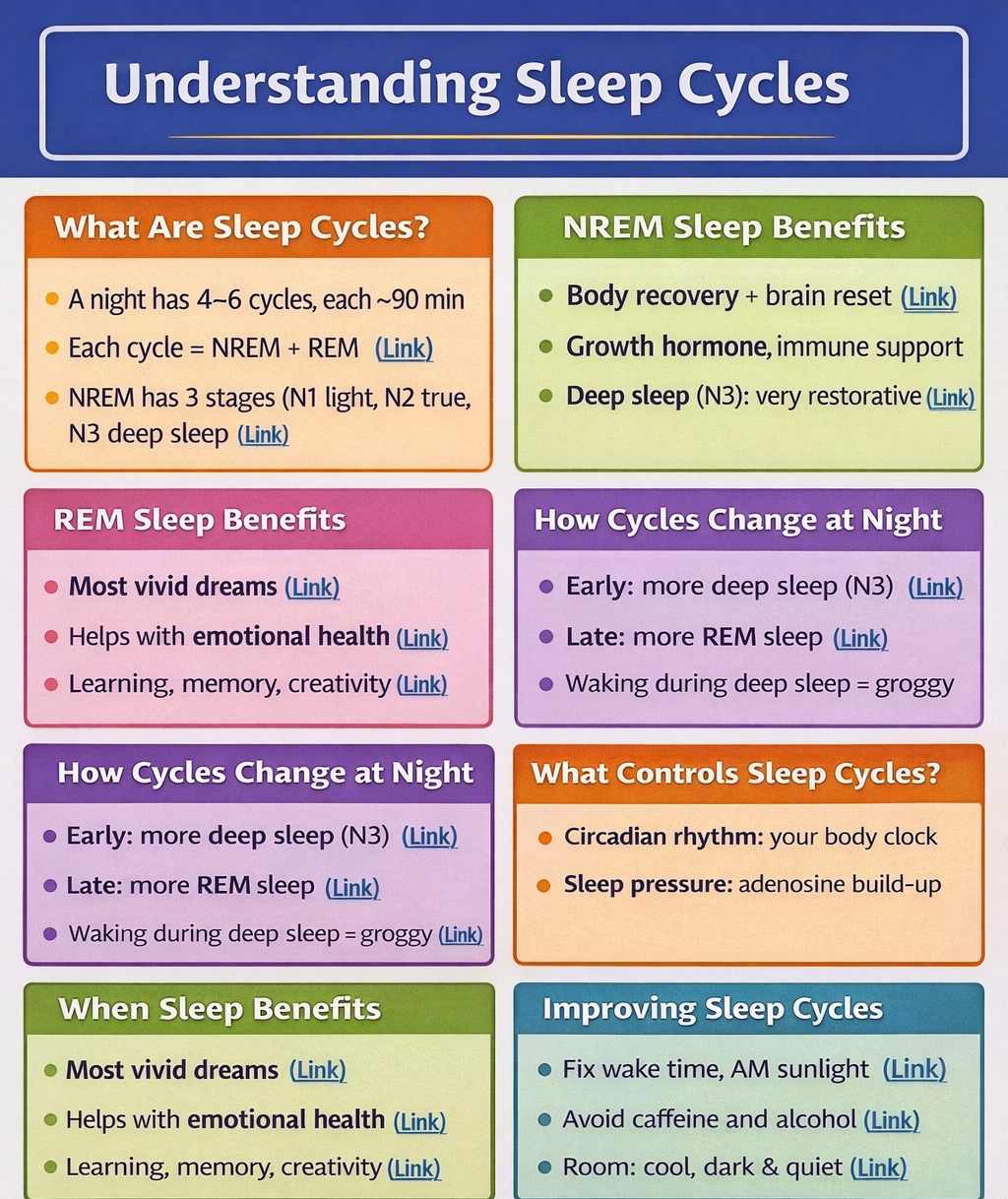
Sleep isn’t one long, uniform “off” state — it’s a repeating cycle of different brain-and-body modes that run all night.
The basic idea
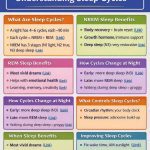
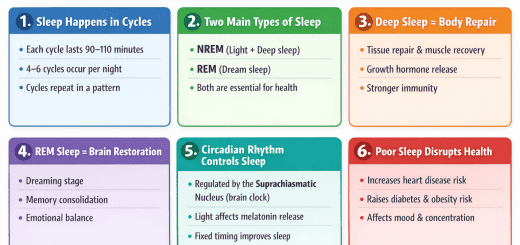
A typical night is made of 4–6 sleep cycles, each lasting about 90 minutes (can range ~70–110). Every cycle includes:
1) NREM sleep (Non-REM) — the “body repair + brain reset” side
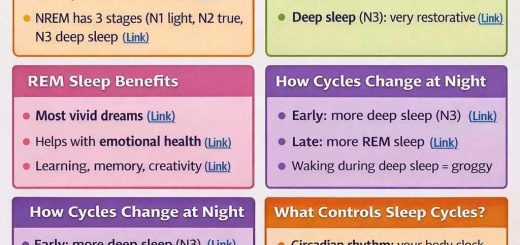
This has 3 stages:
N1 (light sleep)
- You’re drifting in and out
- Easy to wake up
- Brain starts slowing down
N2 (true sleep, still light)
- Your body temperature drops
- Heart rate slows
- Brain shows special patterns called sleep spindles and K-complexes
- This stage is the biggest chunk of your night (often ~45–55%)
N3 (deep sleep / slow-wave sleep)
- Hardest to wake from
- Most physical recovery happens here
- Growth hormone release increases
- Immune system support + muscle repair
- Very important for feeling physically refreshed
2) REM sleep — the “dream + emotional processing” side
REM = Rapid Eye Movement
- Most vivid dreams happen here
- Brain activity looks closer to being awake
- Muscles are mostly “paralyzed” (so you don’t act out dreams)
- Important for memory, learning, creativity, emotional regulation
How cycles change through the night
Sleep cycles aren’t identical.
Early night (first half)
- More deep sleep (N3)
- This is why going to bed late can wreck recovery even if total hours look okay
Late night (second half)
- More REM
- This is why waking up early can affect mood, focus, and emotional balance
Why you feel groggy sometimes (sleep inertia)
If you wake up during deep sleep, you can feel:
- heavy-headed
- confused
- tired even after “enough” hours
Waking closer to light sleep or REM usually feels easier.
What controls your sleep cycles (the real science)
Two big biological systems run your sleep:
1) Circadian rhythm (your body clock)
- Controlled by a brain area called the SCN (suprachiasmatic nucleus)
- Strongly influenced by light
- Helps decide when you feel sleepy or alert
2) Sleep pressure (adenosine build-up)
- The longer you stay awake, the more adenosine builds up in the brain
- This creates a strong drive to sleep
- Caffeine works by blocking adenosine receptors, not by giving “energy”
Key hormones and chemicals involved
- Melatonin: signals nighttime (not a sleeping pill, more like a timing signal)
- Cortisol: naturally rises in early morning to help you wake up
- GABA: calming neurotransmitter, helps initiate sleep
- Orexin (hypocretin): keeps you awake; low orexin is linked to narcolepsy
What sleep cycles are “for”
Different stages serve different jobs:
- Deep sleep (N3) → physical repair, immune support, metabolic health
- REM → emotional processing, memory integration, creativity
- N2 → memory consolidation + stabilizing sleep + learning motor skills
Common myths (quick fixes)
❌ “More sleep is always better”
Quality and timing matter. Oversleeping can make you feel worse.
❌ “Dreaming only happens in REM”
You can dream in NREM too — REM dreams are just more vivid.
❌ “Alcohol helps sleep”
It can knock you out, but it reduces REM and fragments sleep later.
Practical tips to improve sleep cycles
If you want better cycles (not just more hours):
- Keep a fixed wake time
- Get sunlight within 30–60 min of waking
- Avoid caffeine 8–10 hours before bed
- Keep room cool + dark
- Don’t rely on alcohol for sleep
- Try to protect the last 2–3 hours of sleep (REM-heavy)
50 FAQs on Sleep Cycles (Science) — With Answers + External Links
Basics of Sleep Cycles
1) What is a sleep cycle?
A sleep cycle is a repeating pattern of sleep stages (NREM + REM) that typically lasts about 90 minutes.
Link: https://www.sleepfoundation.org/stages-of-sleep
2) How many sleep cycles do humans have per night?
Most adults have 4–6 cycles per night depending on total sleep time.
Link: https://www.sleepfoundation.org/stages-of-sleep
3) How long is one sleep cycle?
Usually 70–110 minutes, average around 90 minutes.
Link: https://www.sleepfoundation.org/stages-of-sleep
4) What are the main stages of sleep?
There are NREM (N1, N2, N3) and REM sleep.
Link: https://www.nhlbi.nih.gov/health/sleep
5) What is NREM sleep?
Non-REM sleep includes light sleep and deep sleep stages that restore the body.
Link: https://www.sleepfoundation.org/stages-of-sleep
6) What is REM sleep?
REM is a stage where brain activity increases and vivid dreaming is common.
Link: https://www.sleepfoundation.org/stages-of-sleep
NREM Stages Explained
7) What is N1 sleep?
N1 is the lightest stage where you drift into sleep.
Link: https://www.sleepfoundation.org/stages-of-sleep
8) What is N2 sleep?
N2 is stable light sleep and makes up the biggest portion of the night.
Link: https://www.sleepfoundation.org/stages-of-sleep
9) What is N3 sleep?
N3 is deep sleep (slow-wave sleep), critical for physical recovery.
Link: https://www.sleepfoundation.org/stages-of-sleep
10) Why is N3 called “slow-wave sleep”?
Because EEG brain waves slow down dramatically during this stage.
Link: https://www.ncbi.nlm.nih.gov/books/NBK526132/
11) What happens to heart rate in NREM sleep?
Heart rate and blood pressure generally decrease.
Link: https://www.nhlbi.nih.gov/health/sleep
12) What happens to breathing in NREM sleep?
Breathing becomes slower and more regular.
Link: https://www.nhlbi.nih.gov/health/sleep
REM Sleep Explained
13) Why do eyes move in REM sleep?
REM includes rapid eye movements linked to active brain processing.
Link: https://www.sleepfoundation.org/stages-of-sleep
14) Why does the body get paralyzed in REM?
To prevent acting out dreams (REM atonia).
Link: https://www.ncbi.nlm.nih.gov/books/NBK526132/
15) Is REM sleep necessary?
Yes—REM supports memory, learning, and emotional regulation.
Link: https://www.health.harvard.edu/newsletter_article/sleep-and-mental-health
16) When do you get most REM sleep?
In the second half of the night.
Link: https://www.sleepfoundation.org/stages-of-sleep
17) Does REM sleep mean you are sleeping lightly?
REM is “active sleep,” but waking from it is often easier than deep sleep.
Link: https://www.sleepfoundation.org/stages-of-sleep
Sleep Architecture (Night Pattern)
18) What is sleep architecture?
It’s the structure of sleep stages across the night.
Link: https://www.ncbi.nlm.nih.gov/books/NBK526132/
19) Why is deep sleep more common early in the night?
Sleep pressure is highest early, so the brain prioritizes N3.
Link: https://www.sleepfoundation.org/how-sleep-works
20) Why is REM sleep more common late in the night?
Circadian rhythm increases REM tendency toward morning.
Link: https://www.sleepfoundation.org/how-sleep-works
21) What is sleep efficiency?
It’s the % of time in bed actually spent sleeping.
Link: https://www.sleepfoundation.org/sleep-hygiene/sleep-efficiency
22) Is it normal to wake up briefly at night?
Yes. Short awakenings are common and often forgotten.
Link: https://www.sleepfoundation.org/how-sleep-works
Brain Activity and Sleep Science
23) What are sleep spindles?
Short bursts of brain activity in N2 linked to learning and memory.
Link: https://www.ncbi.nlm.nih.gov/pmc/articles/PMC4636982/
24) What are K-complexes?
Large EEG waves in N2 that may protect sleep from disturbances.
Link: https://www.ncbi.nlm.nih.gov/books/NBK526132/
25) Why does the brain “clean itself” during sleep?
The glymphatic system increases waste clearance during sleep.
Link: https://www.nih.gov/news-events/nih-research-matters/how-sleep-clears-brain
26) Which sleep stage is best for memory?
Both NREM (especially N2/N3) and REM support different types of memory.
Link: https://www.ncbi.nlm.nih.gov/pmc/articles/PMC3768102/
Dreams and Sleep Cycles
27) Do dreams only happen in REM?
No. Dreams can happen in NREM too, but REM dreams are vivid.
Link: https://www.sleepfoundation.org/dreams
28) Why are REM dreams more vivid?
REM brain activity is closer to wakefulness.
Link: https://www.sleepfoundation.org/dreams
29) Why do we forget dreams?
Memory systems are altered during REM and waking interrupts recall.
Link: https://www.sleepfoundation.org/dreams/why-do-we-forget-dreams
30) What is lucid dreaming?
Lucid dreaming is being aware you are dreaming while asleep.
Link: https://www.sleepfoundation.org/dreams/lucid-dreaming
Circadian Rhythm and Timing
31) What controls the body clock?
The SCN (suprachiasmatic nucleus) in the brain.
Link: https://www.ncbi.nlm.nih.gov/books/NBK519507/
32) How does light affect sleep cycles?
Morning light strengthens circadian rhythm; late light delays sleep.
Link: https://www.sleepfoundation.org/circadian-rhythm/light-and-sleep
33) What is melatonin?
A hormone that signals “nighttime” to the brain.
Link: https://www.nccih.nih.gov/health/melatonin-what-you-need-to-know
34) Is melatonin a sleeping pill?
Not exactly. It helps with timing more than sedation.
Link: https://www.nccih.nih.gov/health/melatonin-what-you-need-to-know
Sleep Pressure and Chemicals
35) What is adenosine?
A brain chemical that builds up while awake and increases sleepiness.
Link: https://www.sleepfoundation.org/how-sleep-works/adenosine-and-sleep
36) How does caffeine affect sleep cycles?
It blocks adenosine receptors and can reduce deep sleep.
Link: https://www.sleepfoundation.org/nutrition/caffeine-and-sleep
37) How long before bed should you stop caffeine?
Often 8–10 hours before bed (varies by person).
Link: https://www.sleepfoundation.org/nutrition/caffeine-and-sleep
Sleep Problems and Cycle Disruption
38) What is sleep fragmentation?
Frequent awakenings that disrupt sleep stages and recovery.
Link: https://www.sleepfoundation.org/how-sleep-works
39) What is insomnia?
Difficulty falling asleep, staying asleep, or getting restorative sleep.
Link: https://www.nhlbi.nih.gov/health/insomnia
40) Does stress affect sleep cycles?
Yes, stress raises arousal hormones and reduces deep sleep.
Link: https://www.apa.org/topics/stress/sleep
41) How does alcohol affect sleep cycles?
Alcohol reduces REM and causes more awakenings later.
Link: https://www.sleepfoundation.org/nutrition/alcohol-and-sleep
42) How does smoking affect sleep?
Nicotine is stimulating and can reduce sleep quality.
Link: https://www.sleepfoundation.org/physical-health/smoking-and-sleep
43) How does sleep apnea affect sleep cycles?
It repeatedly interrupts breathing and fragments deep sleep and REM.
Link: https://www.nhlbi.nih.gov/health/sleep-apnea
Sleep Cycles by Age and Lifestyle
44) Do sleep cycles change with age?
Yes. Deep sleep tends to decrease with age.
Link: https://www.sleepfoundation.org/how-sleep-works/how-much-sleep-do-we-need
45) Why do teenagers sleep late?
Their circadian rhythm shifts later during puberty.
Link: https://www.sleepfoundation.org/teens-and-sleep
46) Why do older adults wake up earlier?
Circadian rhythms often shift earlier with age and sleep becomes lighter.
Link: https://www.nia.nih.gov/health/sleep
47) Does exercise improve sleep cycles?
Yes—regular exercise can improve deep sleep and sleep efficiency.
Link: https://www.sleepfoundation.org/physical-health/exercise-and-sleep
Tracking Sleep Cycles
48) Can smartwatches accurately track REM and deep sleep?
They estimate stages using movement + heart rate; accuracy is limited vs lab testing.
Link: https://www.sleepfoundation.org/sleep-studies/how-accurate-are-sleep-trackers
49) What is the gold standard for measuring sleep stages?
Polysomnography (PSG) in a sleep lab.
Link: https://www.sleepfoundation.org/sleep-studies/polysomnography
50) What is the best “ideal” sleep pattern?
A consistent schedule with enough total sleep so you get both deep sleep and REM.
Link: https://www.cdc.gov/sleep/about_sleep/how_much_sleep.html